
The Role of a Special Educator in Supporting Mental Well-Being:

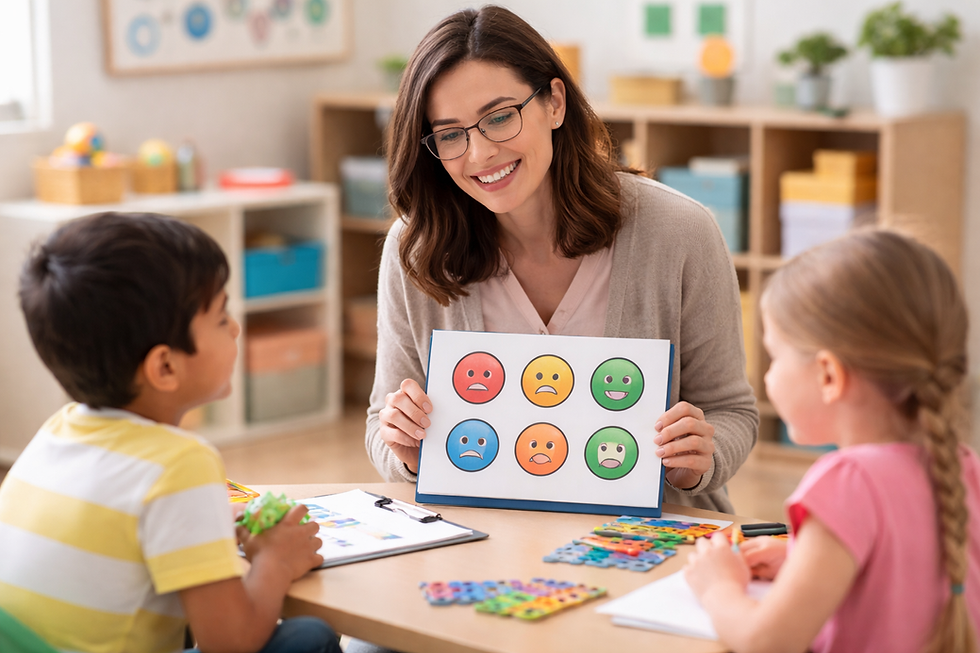
Mental well-being and learning are closely connected, especially for children with special needs. Emotional security, understanding, and appropriate support play a vital role in a child’s overall development.
A special educator supports not only academic growth but also helps them to become independent in activities of daily living, emotional and psychological well-being through structured guidance, observation, and assessment.
🍀Understanding the Child Holistically
A special educator looks beyond academic performance to understand the child as a whole. This includes observing emotional responses, behavior patterns, social interaction, attention levels, their needs, strengths, and stress triggers. Such deep understanding and assessments take time and patience, so that a Special educator can work effectively and efficiently for the well-being of the child.
🧱Assessment as the Foundation of Support
Assessment is a key responsibility of a special educator. Through formal and informal assessments, the educator identifies:
Learning strengths and challenges
Emotional and behavioral patterns
Attention, regulation, and coping skills
Social and communication abilities
🎭Creating Emotionally Safe Learning Environments
Based on assessment insights, special educators design Individualized Education Plans, structured and predictable environments. Visual aids, clear routines, and flexible teaching approaches help reduce frustration, confusion, and emotional overload—essential for maintaining mental well-being.
😇Supporting Emotional Expression and Regulation
Many Special children struggle to express emotions and feelings verbally. They could not express themselves as other children do.Special educators use visual aids, social stories, play-based activities, and alternative communication strategies to help children identify, express, and manage their emotions in healthy ways.
🎈Addressing Behavior Through Understanding, Not Punishment
Behavior is often a form of communication. Special educators help to understand the underlying emotional, sensory, or environmental causes of behavior. Instead of punishment, supportive strategies are used to reduce emotional stress and promote positive behavior.
🧑🤝🧑Supporting Social and Emotional Skills
Special educators help to develop Social and Emotional skills by assessing the child's needs, likes, and dislikes. They help them to develop empathy, cooperation, emotional awareness, and coping with the changes.
👪Collaboration with Parents and Professionals
Assessment findings are shared with parents and relevant professionals to ensure consistency across home, school, and therapy settings. This collaborative approach allows work in the same direction and strengthens emotional support systems for the child.
✋A Preventive Role in Mental Well-Being
Early identification through assessment allows timely intervention. Prevention is better than a cure. Special educators play a preventive role by addressing emotional and learning challenges early, reducing the risk of long-term mental health difficulties.
📝NOTE:
A Special educator plays a vital role in the mental well-being of Special needs children and empowers their families by providing the necessary guidance and hand-holding throughout the process by combining assessment, understanding, and individualized support.

Comments